Scaling Insight: How UX Research Doubled Revenue
Lead UX Researcher @ MakerSights
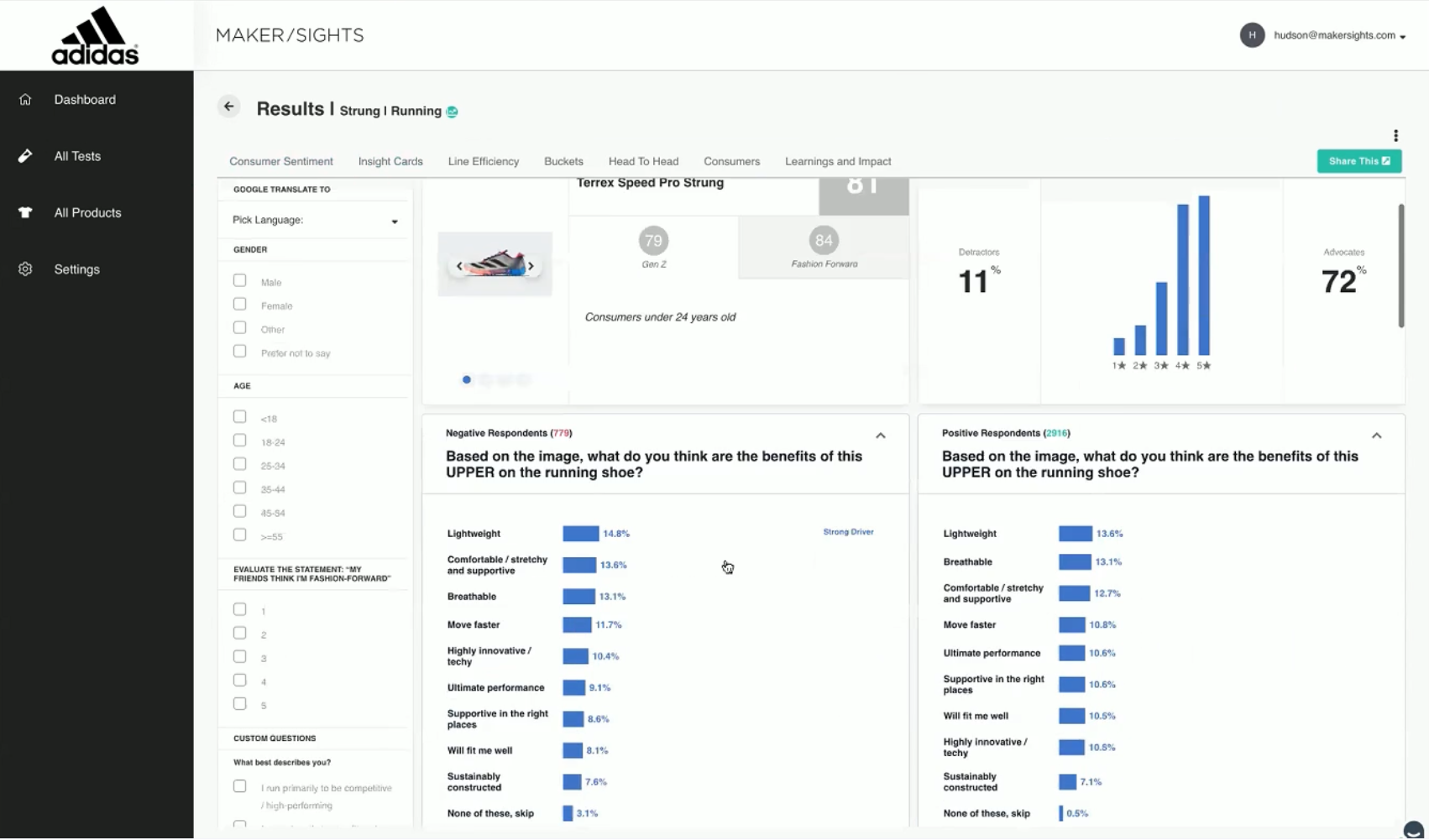
Users had access to rich survey data through our platform, but turning it into actionable insight was slow, manual, and fragmented.
I led a research initiative that uncovered the root causes behind this bottleneck and translated findings into product features, AI capabilities, and a strategic shift in target users—contributing to a 100% increase in quarterly revenue.
The Problem: High Data, Low Usability
MakerSights enables fashion brands to make product decisions using consumer feedback. But internally, teams flagged a critical issue:
Users were spending too much time analyzing survey results—and struggling to extract clear insights.
Despite strong data, the platform wasn’t supporting its key users.
My Role: End-to-End Research Leadership
As the sole UX researcher, I owned the project from scoping to impact:
Defined research goals in partnership with Product and Design
Conducted qualitative research and synthesis
Translated insights into product and strategy decisions
Facilitated alignment across Product, Engineering, Data Science, and Leadership
The approach: Understanding real workflows
To identify where time was being lost, I focused on observing actual behavior:
18 in-depth interviews across 13 brands
Contextual inquiry (“show & tell”)
This revealed a consistent pattern:
Users relied heavily on external tools to complete their workflows.
They were exporting data, rebuilding charts, and manually synthesizing findings—introducing inefficiencies at every step.
Key insight: bottleneck was the lack of flexibility
Three core issues emerged:
Fragmented workflows
Users moved between multiple tools (Excel, Google Sheets, PowerPoint) to complete analysis.Limited data visualization flexibility
The platform didn’t support key comparison workflows or reusable outputs.Insufficient synthesis of qualitative data
Open-text responses were valuable—but too time-consuming to interpret.
Result: Driving impact across three workstreams
Rather than a single output, this research directly informed three parallel workstreams, each contributing to measurable business impact.


1. Product Impact: New Data Visualization Feature
What changed:
I partnered with Design and Product to define and validate a comparison feature that enabled users to:
Compare segments side-by-side
Customize visualizations
Save and reuse charts
I conducted usability testing before development to guide the best user experience.
Result:
Reduced reliance on external tools
Streamlined analysis workflows
Saved users significant time when generating insights
2. Innovation Impact: Enhanced AI Capabilities
What changed:
Research identified a major gap in how open-ended responses were summarized.
I collaborated with Data Science to improve LLM-based processing of qualitative data, focusing on deeper, more actionable synthesis.
Result:
More meaningful summaries of user feedback
Improved understanding of why products resonated
Increased user satisfaction with insights quality
3. Strategic Impact: Redefining the Target User
What changed:
Through synthesis and persona development, I identified that the platform’s highest-value user was not who we thought it was. Rather than retail merchants and designers, it was specifically Customer Insights teams.
I translated findings into clear personas and aligned leadership around this shift.
Result:
Refined product and business strategy
Focused on higher-value customer segments
Contributed to a 100% increase in quarterly revenue (Q4 → Q1)
Outcome: From Data Tool to Decision Engine
This work helped reposition MakerSights:
From a data visualization platform → to a decision-support tool
From generic users → to high-impact insight teams
From manual workflows → to more efficient, integrated analysis
Most importantly, it demonstrated how research can directly drive product direction and business growth.
Reflection: scaling research insight
This project reinforced how research creates the most value when it scales beyond individual studies:
Early insight sharing accelerates decisions
I delivered topline findings quickly to unblock teams while deeper analysis continuedOne research study can enable several teams
The biggest impact came from influencing multiple workstreams simultaneously
By focusing on how users actually worked—and aligning teams around those insights—I helped transform research into a driver of product innovation, strategic focus, and measurable revenue growth.